

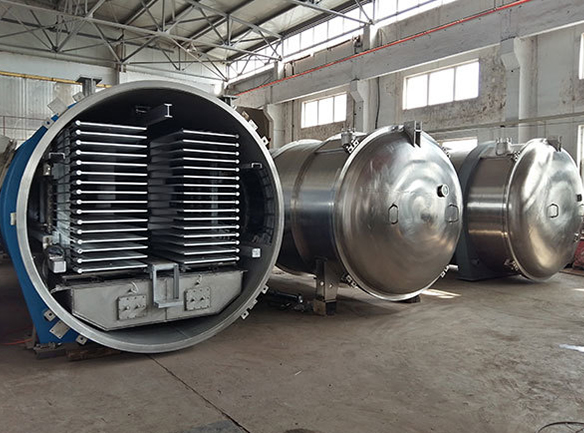
A CE certified fruit lyophilizer machine for freeze-dried durian is a specialized
vacuum freeze-drying system designed to gently remove moisture from fresh durian while preserving
flavor, nutrients, structure, and shelf life. This in-depth guide explains how these machines work,
the advantages for durian processors, typical specifications, safety requirements, and key
selection criteria for industrial and commercial applications.
A fruit lyophilizer machine, also known as a vacuum freeze dryer, uses the
principle of sublimation to dry fruits at low temperature and low pressure. For durian, this
technology enables producers to create premium, crunchy freeze-dried durian
segments, blocks, or powder with intense aroma and long shelf life.
When the equipment is CE certified, it complies with applicable European
directives and standards for safety, health, electromagnetic compatibility, and machinery design.
This certification is essential for exporting fruit freeze-drying equipment to the European
Economic Area and is increasingly valued in other markets as proof of quality and safety.
Typical applications of a CE certified fruit lyophilizer machine for durian include:
CE certification indicates that a fruit lyophilizer machine meets the essential
requirements of relevant European directives. For a CE certified fruit lyophilizer machine
for freeze-dried durian, compliance commonly includes:
For food applications like freeze-dried durian, CE certified fruit lyophilizers often
also follow hygiene-related design practices inspired by EN, ISO, and food contact regulations.
While CE mark itself does not equal food-grade certification, it forms the regulatory backbone for
safe mechanical and electrical operation of the durian freeze-drying equipment.
The operation of a fruit lyophilizer machine for durian is based on lyophilization,
or freeze-drying. Moisture in frozen durian is removed directly from ice to vapor (sublimation)
under low pressure, preventing the liquid phase. This preserves cell structure, nutrients, and
volatile flavor compounds that are easily damaged by traditional hot-air drying.
Pre-freezing of Durian
Fresh durian arils are cleaned, deseeded, and cut into segments, slices, or cubes. The fruit
is then frozen, typically between -35 °C and -45 °C, ensuring that water inside the
durian pulp solidifies into ice.
Vacuum Creation
The frozen durian trays are loaded into the lyophilizer chamber. A vacuum pump reduces
chamber pressure to a level where ice can sublimate, often in the range of a few Pa to tens
of Pa, depending on the process design.
Primary Drying (Sublimation)
Controlled heat is supplied through heating plates or shelves. The energy input drives the
sublimation of ice from the durian while maintaining product temperature below its critical
collapse point. Vaporized moisture condenses on a low-temperature condenser (-40 °C to
-60 °C), preventing it from returning to the product.
Secondary Drying (Desorption)
After most ice has sublimated, the product temperature is gradually raised to remove
bound water. This stage reduces residual moisture to the very low levels required for
freeze-dried durian shelf stability (often below 3–5%).
Return to Ambient Pressure and Unloading
The chamber is backfilled, typically with dry air or nitrogen, to atmospheric pressure.
Trays with fully dried durian are removed and transferred to the packaging station.
A CE certified fruit lyophilizer machine for freeze-dried durian usually includes:
Investing in a CE certified fruit lyophilizer machine for freeze-dried durian delivers
both product quality and operational advantages. The main benefits include:
Excellent flavor retention
Durian has a complex and highly volatile aroma. Freeze-drying at low temperature protects
these compounds, delivering an authentic durian taste in a crunchy format.
Preserved color and structure
The low-heat process prevents browning, caramelization, and collapse of the delicate durian
flesh. The final product maintains a natural color and attractive, porous structure.
High nutritional value
Sensitive nutrients, vitamins, and antioxidants are better preserved compared to conventional
drying methods, making freeze-dried durian a premium functional snack ingredient.
Extended shelf life
With moisture reduced to very low levels, freeze-dried durian stored in appropriate packaging
can achieve long shelf life without refrigeration or chemical preservatives.
High value-added product
Freeze-dried durian segments, cubes, and powders command a significant price premium over
fresh or hot-air-dried products, supporting higher margins and export opportunities.
Reduced product returns and waste
Stable, shelf-stable products reduce spoilage in the supply chain and allow distributors more
flexibility in inventory management.
Process control and repeatability
Modern lyophilizers feature programmable recipes, allowing consistent cycles for different
durian varieties or slice sizes, ensuring uniform quality batch after batch.
Regulatory and market acceptance
CE certification facilitates import into the EU market and is often viewed as a benchmark for
safety and reliability by buyers worldwide.
Scalability
Modular designs mean processors can start with pilot or small industrial lyophilizers and
scale up to large continuous systems as demand for freeze-dried durian grows.
Durian differs from many other fruits in terms of fat content, sugar profile, and aroma strength.
A fruit lyophilizer machine for freeze-dried durian must be configured to handle
these unique properties.
High fat content — Durable process control is required to avoid oil migration
and collapse during secondary drying. Shelf temperature and chamber pressure must be carefully
balanced.
Strong aroma and sulfur compounds — Adequate ventilation and, where needed,
deodorization or condenser defrost systems prevent persistent odor build-up in the chamber.
Texture variability — Different ripeness levels create variations in cell
structure. Pre-processing, cutting patterns, and loading density should be tailored to each
durian source.
Stickiness and sugar concentration — Proper pre-freezing and moderate heating
rates reduce sticking to trays and help maintain a free-flowing product.
Using a CE certified fruit lyophilizer machine, processors can manufacture a wide
range of durian-based products for global markets.
The exact design of a CE certified fruit lyophilizer machine for freeze-dried durian
varies according to capacity, automation level, and plant layout. The following tables summarize
typical specification ranges found in commercial and industrial systems.
| Parameter | Typical Range / Description |
|---|---|
| Application | Durian segments, durian cubes, durian paste sheets, durian powder preforms |
| Batch fresh durian capacity | From 20–50 kg (pilot) up to 1,000–5,000 kg (industrial) per batch |
| Final moisture content | Typically 2–5% (w.b.), depending on product and storage requirements |
| Chamber operating pressure | Approx. 5–100 Pa during primary drying, adjustable |
| Shelf temperature range | -40 °C to +80 °C (cooling and heating phases) |
| Condenser temperature | -40 °C to -60 °C during vapor capture |
| Typical cycle time for durian | 12–36 hours, depending on slice thickness, loading density, and target moisture |
| Power supply | 3-phase, 380–480 V, 50/60 Hz (depending on market and customization) |
| Control system | PLC + HMI touch screen, recipe-based automatic control with manual override |
| Automation level | Semi-automatic to fully automatic with integrated loading and unloading systems |
| Item | Typical Specification |
|---|---|
| Chamber construction | Stainless steel, cylindrical or rectangular design, internally polished |
| Number of shelves | 5–40 shelves or more, depending on model |
| Shelf spacing | 60–120 mm, optimized for durian tray height |
| Tray material | Food-grade stainless steel, perforated or solid according to product |
| Tray size | Customizable (e.g., 600 × 800 mm, 600 × 1,200 mm) for durian segments |
| Loading system | Manual trolley loading or automatic in/out systems for industrial capacity |
| Door sealing | Silicone or EPDM gaskets, designed for repeated vacuum cycles |
| Internal surface finish | Ra ≤ 0.8 μm, easy to clean and resistant to durian residues |
| Subsystem | Typical Features |
|---|---|
| Vacuum pump configuration | Single-stage or two-stage rotary vane / screw pumps with booster if necessary |
| Ultimate vacuum | ≤ 1 Pa (empty chamber), operational range controlled for product stability |
| Vacuum valves | Automatic isolation valves, safety valves, and pressure relief devices |
| Refrigeration type | Mechanical compression system, single or multiple stages |
| Refrigerant | Eco-friendly refrigerants compliant with current regulations |
| Cooling water requirement | Specified flow and pressure for condensers and compressors (if water-cooled) |
| Defrost system | Automatic condenser defrost for efficient ice removal between cycles |
| Control Aspect | Description |
|---|---|
| PLC control | Recipe-based control of shelf temperature, vacuum, and cycle timing |
| HMI interface | Touch screen display with multilingual support and trends visualization |
| Data logging | Automatic recording of temperature, pressure, and time for each batch |
| Alarm system | Visual and audible alarms for deviations, with event history |
| Remote access | Optional remote monitoring and support via Ethernet or industrial protocols |
| Recipe management | Multiple freeze-drying recipes for various durian slice sizes and formulations |
| User management | Password-protected access levels for operators, supervisors, and maintenance staff |
Any CE certified fruit lyophilizer machine for freeze-dried durian used in food
processing must feature hygienic design and suitable construction materials.
Food-grade stainless steel — Chamber interior, shelves, and trays are commonly
fabricated from AISI 304 or 316L stainless steel for corrosion resistance and cleanliness.
Smooth welds and rounded corners — Help prevent accumulation of durian particles
and facilitate thorough cleaning.
Sanitary piping and valves — For any process fluids, CIP systems, or connections
to vacuum and condensate drains.
Cleanable seals and gaskets — Resistant to fats, sugars, and aromatic compounds
present in durian.
CIP options — Some industrial fruit lyophilizers integrate cleaning-in-place
circuits to reduce manual cleaning time.
To meet CE requirements, a fruit lyophilizer machine for durian must incorporate
a wide set of mechanical and electrical safety features.
Emergency stop circuits — Emergency buttons located near operator stations for
immediate shutdown.
Interlocked doors — Prevent door opening when the chamber is under vacuum or
in hazardous states.
Overpressure and vacuum relief — Safety valves, rupture disks, or relief systems
to protect against abnormal pressure conditions.
Electrical protection — Circuit breakers, overload relays, earth leakage protection,
and grounding in compliance with applicable standards.
Thermal protection — Temperature limits to avoid overheating of equipment and
product, especially during secondary drying.
EMC and noise control — Proper shielding, grounding, and mechanical design to
meet electromagnetic and noise limits.
Operator training and documentation — CE certified machines are supported by user
manuals, risk assessments, and maintenance instructions that help reduce hazards.
Selecting the right fruit lyophilizer machine for durian depends on capacity needs,
process requirements, regulatory expectations, and budget.
While detailed procedures differ by plant, the general workflow when using a
CE certified fruit lyophilizer machine for freeze-dried durian is:
Raw durian reception and inspection
Check maturity, flavor, and absence of contamination.
Peeling, deseeding, and cutting
Prepare durian arils as segments, slices, or cubes of consistent thickness.
Pre-freezing
Quick-freeze the prepared durian on trays or in molds to ensure uniform ice crystals.
Loading into fruit lyophilizer machine
Load frozen trays into the chamber, respecting maximum loading density and air gaps.
Lyophilization cycle
Start the programmed recipe: chamber evacuation, shelf cooling or heating, primary and
secondary drying stages.
Cycle completion and unloading
After reaching target moisture, backfill the chamber, open the door, and remove trays.
Screening, grading, and packaging
Separate broken pieces if necessary, perform quality checks, and pack in moisture-barrier
packaging (e.g., foil pouches, vacuum bags, nitrogen-flushed containers).
Storage and distribution
Store in a cool, dry environment, then distribute domestically or export to overseas markets.
Due to the rich fat and strong aroma of durian, maintenance and cleaning plans for a
fruit lyophilizer machine are particularly important.
Regular cleaning — Trays, shelves, chamber surfaces, and door gaskets should be
cleaned after batches to prevent odor accumulation and microbial growth.
Vacuum system checks — Periodic inspection of vacuum pump oil, seals, and hoses
to maintain stable vacuum and extend equipment life.
Refrigeration system servicing — Scheduled maintenance on compressors, condensers,
and expansion devices according to the operating hours and environmental conditions.
Sensor calibration — Routine calibration of temperature and pressure sensors
ensures reliable control and traceability of the freeze-drying process.
Filter replacement — Replacement of air and process filters as needed to prevent
contamination and maintain air quality.
Freeze-drying is energy intensive. However, careful design and operation of a
CE certified fruit lyophilizer machine for freeze-dried durian can significantly
improve efficiency.
Optimized cycle design — Adjusting shelf temperature ramps and pressure levels
to achieve faster drying while preserving durian quality.
Loading pattern optimization — Ensuring consistent tray loading to avoid
cold spots or uneven drying that waste energy.
Heat recovery options — Where possible, recovering waste heat from compressors
for preheating or plant utilities.
Insulation and sealing — Good thermal insulation and vacuum sealing reduce
heat losses and improve system performance.
Consistent, high-quality freeze-dried durian requires robust quality control along
the entire processing line.
Incoming durian inspection — Taste, aroma, Brix, and absence of defects.
In-process checks — Monitoring product temperature and moisture at critical
stages of lyophilization.
Finished product testing — Moisture content, water activity, microbial load,
color, and texture analysis.
Packaging integrity — Seal checks, leak detection, and shelf-life validation in
real storage conditions.
Traceability — Batch records captured via the lyophilizer’s control system,
including time-temperature-pressure histories and operator actions.
Demand for exotic, tropical, and functional snacks has driven rapid growth of the
freeze-dried durian market in Asia, Europe, and North America. As consumers seek
natural, clean-label ingredients, durian stands out for its unique flavor and high-energy profile.
This trend creates expanding opportunities for processors investing in
CE certified fruit lyophilizer machines capable of producing consistent,
export-grade freeze-dried durian for:
Regulatory compliance, energy efficiency, and flexible configurations are likely to remain dominant
purchasing criteria for fruit lyophilizers in this expanding segment.
A general laboratory or small-scale freeze dryer is designed for a broad variety of products but may
lack the tray area, refrigeration capacity, and hygienic design required for industrial durian
processing. A fruit lyophilizer machine for freeze-dried durian is engineered with
appropriate tray spacing, food-grade materials, odor management, and process control features tailored
for high-load fruit applications and continuous or batch industrial production.
CE certification demonstrates conformity with European health, safety, and environmental protection
standards. For companies exporting freeze-dried durian to the European Union, having a
CE certified fruit lyophilizer machine reduces regulatory barriers and reassures
customers and auditors that equipment has been evaluated against recognized safety and performance
criteria.
Cycle times vary widely, usually between 12 and 36 hours for durian, depending on the slice thickness,
product load per tray, initial frozen condition, and desired final moisture. Optimization of the
lyophilization recipe can significantly reduce total processing time while maintaining quality.
When produced and packaged correctly using a fruit lyophilizer machine, freeze-dried
durian can achieve a shelf life of 12 to 24 months or longer, provided it is stored in airtight,
moisture-proof packaging and kept away from heat and light.
Yes. A CE certified fruit lyophilizer machine designed for durian can typically handle
many other fruits such as mango, pineapple, banana, dragon fruit, and berries. However, operators
often develop specific recipes and cleaning protocols to handle differences in sugar content, acidity,
and aroma to prevent cross-flavor contamination.
A CE certified fruit lyophilizer machine for freeze-dried durian is a key investment
for processors aiming to produce premium, export-ready durian snacks and ingredients. By leveraging
controlled vacuum freeze-drying, these systems preserve the intense flavor, nutritional profile,
and natural appearance of durian while delivering long shelf life and high added value.
When selecting such equipment, processors should evaluate capacity, technical configuration, hygiene
design, energy efficiency, and compliance documentation. With careful planning and operation, fruit
lyophilizers enable reliable, scalable production of freeze-dried durian products that meet global
quality and safety expectations.
```
Este sitio web utiliza cookies para garantizar que obtenga la mejor experiencia en nuestro sitio web.
 English
 Pусский
 Français
 العربية



 Whatsapp
 Teléfono
Comentario
(0)