

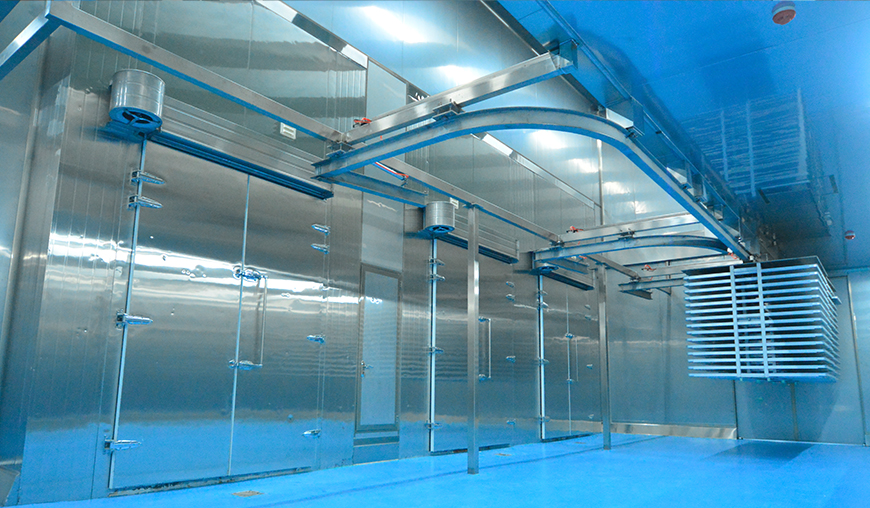
An industrial lyophilizer machine with automatic control is a critical piece of equipment in
modern pharmaceutical, biotechnology, food, and chemical production. This page provides an in‑depth,
SEO‑friendly introduction to industrial lyophilization systems, including definitions, working principles,
technology options, advantages, typical specifications, application fields, and selection guidelines.
An industrial lyophilizer machine, also called an industrial freeze dryer or
industrial lyophilization system, is a large‑scale unit used to remove water or solvent from sensitive
products by freezing and sublimation under vacuum. When equipped with
a sophisticated automatic control system, the machine can precisely manage temperature,
pressure, time, and process steps to achieve reproducible, high‑quality drying results in a production
environment.
In industrial settings, lyophilizers are used for:
The automatic control component typically includes PLC‑based or industrial PC‑based
controls, a human‑machine interface (HMI), recipe management, data logging, and integration with plant
monitoring systems. This automation transforms the lyophilizer from a manual machine into a fully
qualified, compliant, and programmable industrial lyophilization platform.
The core principle of an industrial lyophilizer machine with automatic control is
the combination of:
The process can be divided into three main stages.
In industrial lyophilization, product in trays, vials, or bulk containers is placed on
temperature‑controlled shelves. The automatic control system cools the shelves to a set
profile, freezing the product below its eutectic or glass transition temperature. Proper freezing
structure is essential for achieving stable and uniform sublimation during primary drying.
After freezing, the lyophilizer’s vacuum system reduces the chamber pressure while the shelves are
gently heated. Under these conditions, ice in the product sublimates directly to vapor without passing
through the liquid phase. The automated control system regulates:
Vapors migrate to the cold condenser and solidify as ice. Primary drying typically removes 80–90% of
the initial water content and is the longest and most critical phase in an industrial lyophilizer.
Once most free ice has sublimated, secondary drying begins. Shelf temperature is increased further while
pressure is often reduced to drive off water that is chemically or physically bound to the product matrix.
The automatic control system fine‑tunes this phase to reach the desired final residual moisture
and maintain product stability without degrading sensitive components.
A modern industrial lyophilizer machine with automatic control consists of several
integrated subsystems designed for reliability, cleanability, and precise control in a production
environment.
The drying chamber is a vacuum‑rated, usually stainless steel, enclosure containing
heat‑transfer shelves that support the product. Key features include:
Industrial lyophilizer machines use powerful refrigeration systems to cool both the shelves and condenser.
Heating is usually achieved by circulating thermal fluid (such as silicone oil) or through electric
heating elements. The automatic control system manages cooling and heating loops to follow validated
temperature profiles.
The vacuum system in an industrial lyophilizer includes:
This system reduces chamber pressure to levels where sublimation can occur at the defined shelf
temperature, often in the range of a few pascals to a few tens of pascals.
The condenser provides a low‑temperature surface for capturing vapors from the product. Ice builds up on
condenser coils and must be removed periodically during defrost cycles. Industrial lyophilizers may use:
The automatic control system is the intelligence of an industrial lyophilizer. It
typically comprises:
Through this system, operators can:
Many industrial lyophilizer machines, especially in pharmaceutical and biotechnology applications, are
designed to be CIP/SIP capable. Spray balls, steam lines, and automatic cleaning
programs enable internal surfaces and piping to be cleaned and sterilized without disassembly. This
is critical for maintaining aseptic conditions and complying with GMP regulations.
The key differentiator of an industrial lyophilizer machine with automatic control is
the level of automation, monitoring, and integration it provides. Advanced control features enhance
process reliability, reproducibility, and regulatory compliance.
Users can define and store multiple lyophilization recipes covering:
Recipes can be assigned to specific products, batch sizes, container types, and process objectives.
Industrial lyophilizer machines continuously measure and record:
The automatic control system logs these parameters, often at defined intervals, and stores batch
reports for long‑term traceability.
Advanced systems may incorporate PAT tools such as:
Integrating these tools into the automatic control platform can optimize cycle times and protect
product quality.
Automatic control includes multiple alarms and interlocks:
These features prevent unsafe operations, equipment damage, and product loss.
Modern industrial lyophilizers often support:
Implementing an industrial lyophilizer machine with automatic control brings numerous technical and
economic advantages when compared to manual or semi‑automatic freeze drying equipment.
Industrial lyophilizer machines with automatic control are widely used across several industries.
Key application segments include:
In these applications, an industrial lyophilizer must satisfy strict GMP, sterile processing, and
validation requirements. Automatic control systems are essential for reproducibility, documentation,
and regulatory acceptance.
Industrial food freeze dryers prioritize product texture, color, nutrient retention, and shelf life.
Automatic control systems ensure consistent quality and efficient energy utilization.
For these materials, an industrial lyophilizer machine provides low‑temperature drying conditions that
preserve structural and functional properties that would be destroyed in conventional dryers.
Although smaller pilot and laboratory freeze dryers are common in R&D, industrial lyophilizer
machines with automatic control are crucial for:
Actual specifications vary by manufacturer, capacity, and application. The following
typical technical specification tables provide generic reference values
for an industrial lyophilizer machine with automatic control.
| Parameter | Typical Range / Description |
|---|---|
| Usable Shelf Area | 5 m² to >50 m² depending on model and application |
| Number of Shelves | 5–20 shelves or more, adjustable shelf spacing |
| Shelf Temperature Range | -60 °C to +80 °C (or broader depending on design) |
| Condenser Capacity | 50 kg to >1000 kg of ice per batch |
| Final Vacuum Level | ~1 Pa to 100 Pa, depending on process and configuration |
| Chamber Design Pressure | Vacuum to near atmospheric pressure |
| Cooling System | Mechanical refrigeration using single or cascade compressors |
| Heating Medium | Circulating thermal fluid (silicone oil or similar) |
| Power Supply | Typically 380–480 V, 3‑phase, 50/60 Hz |
| Control System | PLC/IPC with HMI, automatic recipe control, data logging |
| Construction Material | Stainless steel (chamber, shelves, condenser surfaces) |
| Cleanability | CIP/SIP options for pharmaceutical configurations |
| Model Category | Usable Shelf Area | Ice Condenser Capacity (per batch) | Typical Application Scale |
|---|---|---|---|
| Small Industrial / Pilot | 5–10 m² | 50–150 kg | Pilot production, clinical trial material, small commercial batches |
| Medium Industrial | 10–30 m² | 150–500 kg | Standard commercial production for multiple products |
| Large Industrial | 30–80 m² or more | 500–1500 kg | High‑volume production plants, dedicated product lines |
| Function | Description |
|---|---|
| Automatic Cycle Control | Fully automated start‑up, freeze, primary drying, and secondary drying sequence |
| Recipe Storage | Multiple user‑defined recipes with adjustable parameters and version control |
| Trend Display | Real‑time and historical curves for temperature, pressure, and key variables |
| Alarm Management | Alarm hierarchy, acknowledgement, logging, and reporting for maintenance analysis |
| User Management | Access levels with password protection and role‑based permissions |
| Data Export | Batch reports as PDF, CSV, or other formats for quality documentation |
| Integration Interfaces | Ethernet, Modbus, Profibus, or OPC for external system communication |
| Audit Trail | Recording of user actions, setpoint changes, and system events |
Industrial lyophilizer machines with automatic control can be categorized by application, loading
method, and design features.
capable, compliant with GMP, often integrated with vial loading systems.
handling bulk product, trays, or racks.
polymers, and chemical intermediates.
systems for high‑volume pharmaceutical lines.
Selecting the right industrial lyophilizer machine requires analysis of product characteristics, process
requirements, regulatory expectations, and budget constraints. The following points serve as a practical
selection checklist.
Proper operation and maintenance ensure long‑term performance of an industrial lyophilizer machine with
automatic control and protect product quality.
Laboratory lyophilizers are designed for small‑scale research and development, while an industrial
lyophilizer machine with automatic control is built for large‑scale, continuous production with
robust automation, higher capacity, and integrated CIP/SIP options.
Automatic control provides consistent cycle execution, reduces operator error, enhances product quality,
and generates electronic records for regulatory compliance. It also enables sophisticated control
strategies and optimization of cycle times.
Yes. By using product‑specific recipes and proper cleaning or sterilization protocols, a single industrial
lyophilizer can process multiple types of products. However, cycle development and validation are needed
for each new product.
Cycle time depends on product thickness, formulation, and process conditions. Typical industrial cycles
may range from 10 to 60 hours or more, including freezing, primary drying, and secondary drying phases.
Common utility requirements include electrical power, cooling water or chilled water, clean steam (for
SIP systems), compressed air for valves and actuators, and sometimes nitrogen for inerting or leak
testing.
An industrial lyophilizer machine with automatic control is a strategic investment for
companies in the pharmaceutical, biotechnology, food, and specialty chemical industries. By combining
advanced automation with precise control over temperature, pressure, and time, these systems deliver
reliable, high‑quality freeze‑dried products at industrial scale.
When planning a new installation or upgrading existing equipment, careful evaluation of product needs,
capacity requirements, automation functions, and regulatory obligations is essential. With the right
configuration, an industrial lyophilization system can significantly improve productivity, product
stability, and overall process efficiency.
```
Este sitio web utiliza cookies para garantizar que obtenga la mejor experiencia en nuestro sitio web.
 English
 Pусский
 Français
 العربية



 Whatsapp
 Teléfono
Comentario
(0)